Easy Tanghulu Recipe – Delicious Chinese Candied Fruit
Tanghulu Recipe (Chinese Candied Fruit) – the dazzling, jewel-like confections that have captured hearts and taste buds worldwide. These aren’t just simple treats; they are a vibrant explosion of sweet, tangy fruit encased in a shatteringly crisp, glassy sugar shell. Imagin extracte biting into a perfectly ripe strawberry or a tart hawthorn berry, only to be met with that satisfying crack of the hardened sugar, revealing the juicy goodness within. It’s this unique textural contrast, coupled with the delightful sweetness that perfectly balances the fruit’s natural tang, that makes Tanghulu so incredibly addictive and beloved. What truly sets this Tanghulu Recipe apart is the sheer simplicity of its creation, allowing the natural flavors of the fruit to shine while being elevated by the magic of caramelized sugar. It’s a nostalgic taste of childhood for many and a delightful new adventure for others, promising pure, unadulterated joy with every bite.
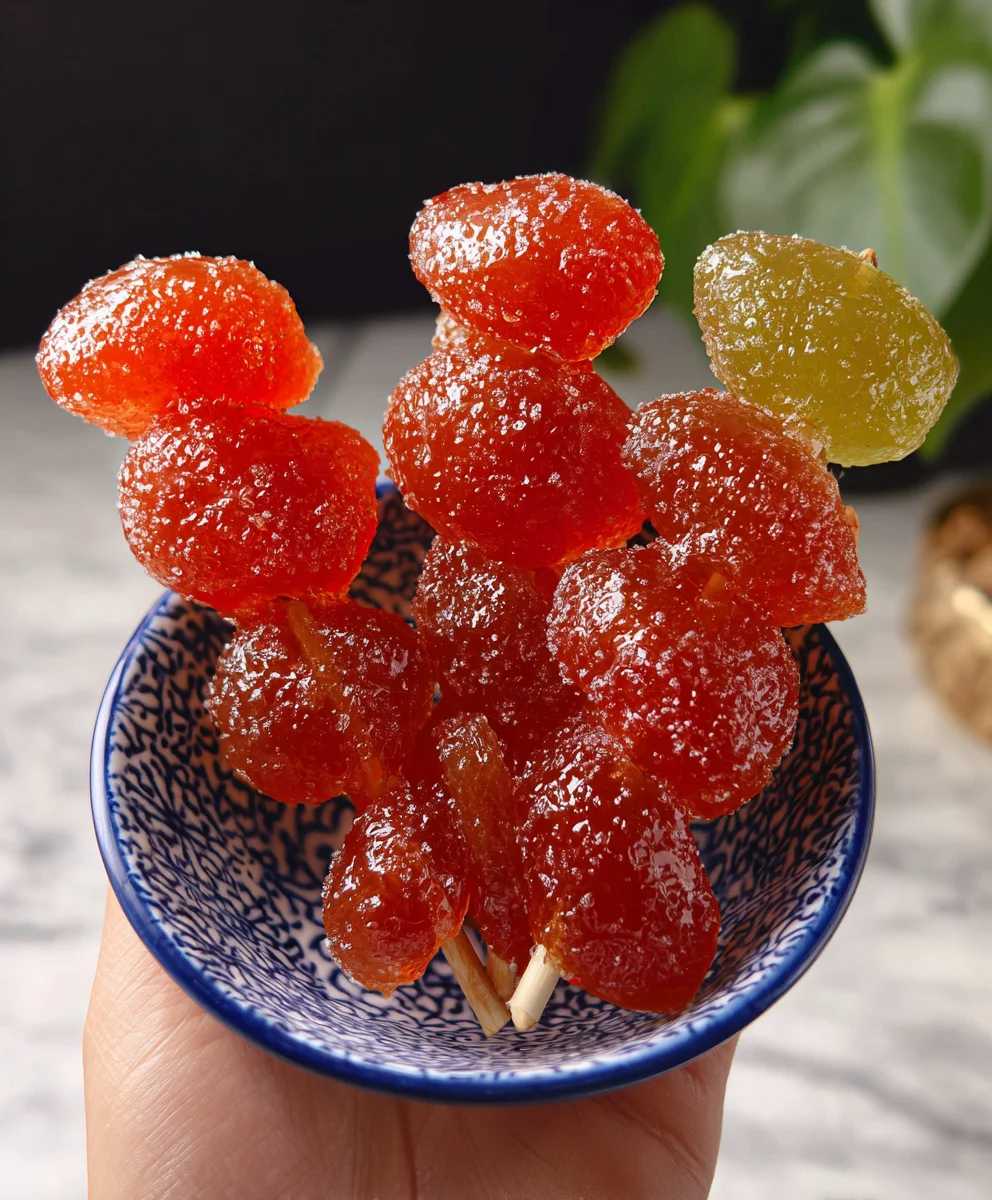
Ingredients:
- 1 lb fresh fruit (strawberries, grapes, cherry tomatoes, or even apple slices work wonderfully)
- 2 cups granulated white sugar
- 1 cup water
- Popsicle sticks or bamboo skewers
- Parchment paper or a silicone baking mat
Preparing Your Fruit
The foundation of a perfect Tanghulu is meticulously prepared fruit. For strawberries, I like to leave them whole if they’re on the smaller side, or hull and halve any larger ones. If you’re using grapes, make sure they are plump and firm. For cherry tomatoes, simply wash and dry them thoroughly. The key here is ensuring your fruit is completely dry. Any excess moisture will interfere with the sugar coating, preventing it from hardening properly and resulting in a sticky, unappealing mess. After washing, I spread my chosen fruit out on a clean kitchen towel or paper towels and gently pat them dry. Once dry, I insert a popsicle stick or skewer firmly into each piece of fruit. This will be your handle for dipping and will also make them easier to serve and enjoy. Ensure the stick is inserted deep enough to provide a secure grip but not so far that it pierces through the other side.
Crafting the Sugar Syrup
This is where the magic happens! In a medium saucepan, combine the 2 cups of granulated white sugar and 1 cup of water. Place the saucepan over medium heat. Now, here’s a crucial tip: resist the urge to stir the sugar mixture once it starts to heat up. Stirring can cause the sugar crystals to prematurely form and crystallize, leading to a gritty syrup instead of a smooth, glossy coating. Instead, let the sugar and water gently come together on their own. You’ll notice the sugar will gradually dissolve into the water. Keep a close eye on the mixture as it heats. We are aiming for a specific temperature for the perfect hard crack stage, which is between 300°F and 310°F (149°C to 154°C). If you have a candy thermometer, this is the time to use it! Clip it to the side of the saucepan, ensuring the tip is submerged in the syrup but not touching the bottom. If you don’t have a thermometer, you can test the syrup’s readiness by carefully dropping a small amount into a glass of ice-cold water. It should instantly harden into brittle threads. The syrup will bubble and thicken considerably. This process can take anywhere from 10 to 15 minutes, depending on your stove’s heat.
Achieving the Hard Crack Stage
Patience is a virtue when it comes to the sugar syrup. As the syrup cooks, it will go through various stages. Initially, it will be cloudy, then clear, and then it will start to turn a very pnon-alcoholic ale straw color. This is the stage we’re looking for. You want the syrup to reach the “hard crack” stage. This means that when a drop of the syrup is placed into cold water, it will form hard, brittle threads that snap easily. If you take it too early, the coating will be soft and sticky. If you cook it too long, the sugar will burn and turn a dark, bitter brown, which is unpleasant. Keep the heat at a steady medium. Don’t be tempted to crank up the heat to speed things along, as this increases the risk of burning. You’ll see large bubbles forming and the syrup will start to become more viscous. Visually, you’re looking for a clear, amber hue – not too light and certainly not dark brown. The smell will also change slightly, becoming sweeter and more caramelized.
The Art of Dipping
Once your sugar syrup has reached the hard crack stage and has a lovely amber color, it’s time to dip your fruit. Work quickly, as the syrup will start to cool and thicken. Carefully swirl each fruit-covered skewer into the hot sugar syrup, ensuring it’s fully coated. For a beautiful, even coating, you can gently rotate the skewer. You want a thin, uniform layer of sugar, not a thick, lumpy one. Avoid over-dipping, which can lead to excess sugar that might drip off and create a mess. As you lift the fruit out of the syrup, let any excess drip off for a moment before placing it on your prepared parchment paper or silicone mat. The speed at which the syrup hardens is astonishing, so this is a fast-paced step. If the syrup starts to get too thick or cool down too much, you can briefly return the saucepan to low heat to gently re-warm it, but be very careful not to scorch it.
Cooling and Setting
After dipping each piece of fruit, place it on the parchment paper or silicone mat, ensuring there’s a little space between each Tanghulu. This prevents them from sticking to each other as the sugar hardens. You’ll hear a satisfying crackling sound as the hot syrup meets the cooler fruit, and you can watch the glossy coating transform into a beautiful, hard shell. Let the Tanghulu cool completely at room temperature. This process typically takes about 15 to 20 minutes, but the exact time will depend on the ambient temperature and humidity. Avoid the temptation to refrigerate them, as this can sometimes make the sugar coating a bit sticky due to condensation. Once they are completely cool and the sugar shell is hard and brittle, your Tanghulu is ready to be enjoyed! The contrast between the crisp, sweet candy shell and the juicy, fresh fruit inside is truly delightful. You can store any leftover Tanghulu in an airtight container at cool room temperature for a day or two, though they are best enjoyed fresh.
Conclusion:
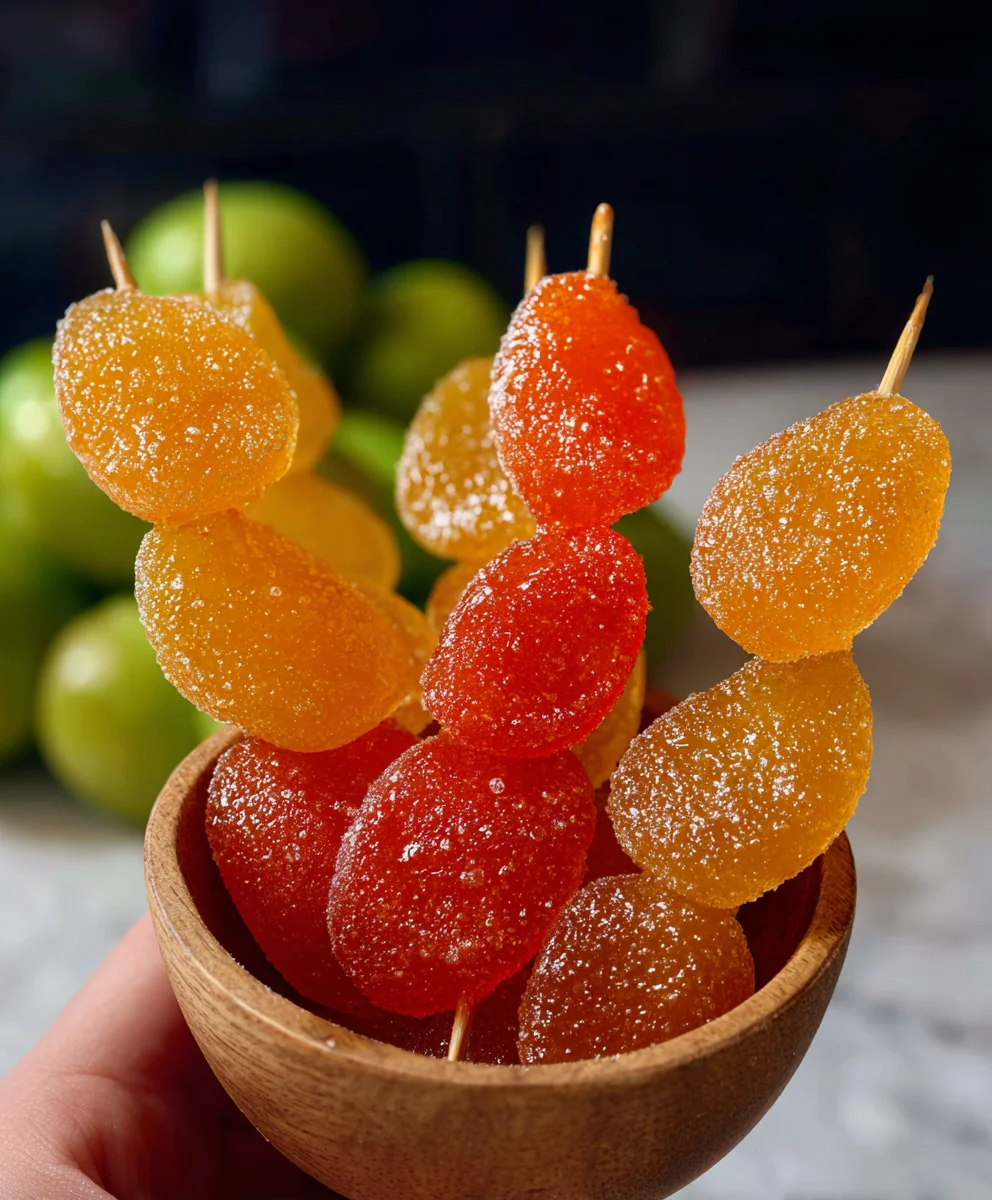
We’ve reached the sweet, sticky end of our journey through making the delightful Tanghulu Recipe (Chinese Candied Fruit)! This recipe is surprisingly straightforward and incredibly rewarding, transforming simple fruit into a shimmering, irresistible treat. The joy of biting into that crisp candy shell and then into the juicy fruit is truly a moment to savor. Don’t be intimidated by the candy-making aspect; with a little patience and careful attention to temperature, you’ll be a tanghulu pro in no time.
For serving, tanghulu are best enjoyed fresh, right after the candy shell has hardened. They make a fantastic dessert, a fun party favor, or a unique snack for a special occasion. Consider arrangin extractg them on a platter for a stunning visual display. The possibilities for customization are endless, so feel free to experiment with different fruits. Strawberries, grapes, and cherry tomatoes are also popular choices. You can even try adding a drop of food coloring to your sugar syrup for vibrant hues.
I encourage you to give this Tanghulu Recipe (Chinese Candied Fruit) a try. It’s a wonderful way to bring a touch of global culinary adventure into your own kitchen. The satisfaction of creating these beautiful confections from scratch is immense. So gather your ingredients, get your candy thermometer ready, and prepare to be amazed by the simple magic of candied fruit!
Frequently Asked Questions about Tanghulu Recipe (Chinese Candied Fruit):
Q1: What is the ideal temperature for the sugar syrup for tanghulu?
The most common and recommended temperature for the sugar syrup to achieve that perfect crisp, crackly shell for your Tanghulu Recipe (Chinese Candied Fruit) is around 300-310°F (150-155°C), also known as the hard crack stage. Using a candy thermometer is crucial for accuracy. If you don’t have one, you can test by dropping a small amount of syrup into ice water; it should form hard, brittle threads.
Q2: My tanghulu shell is sticky, not hard. What went wrong?
This usually happens if the sugar syrup didn’t reach a high enough temperature. It’s essential to let the syrup boil until it reaches the hard crack stage (300-310°F or 150-155°C). Another factor could be humidity; on very humid days, the candy can absorb moisture from the air and become sticky. Try to make your tanghulu on a drier day if possible.
Easy Tanghulu Recipe – Delicious Chinese Candied Fruit
A simple and delicious recipe for making authentic Chinese Tanghulu, featuring fresh fruit coated in a crisp, hard candy shell.
Ingredients
-
1 lb fresh fruit (e.g., strawberries, grapes, cherry tomatoes, or apple slices)
-
2 cups granulated white sugar
-
1 cup water
-
Popsicle sticks or bamboo skewers
-
Parchment paper or a silicone baking mat
Instructions
-
Step 1
Prepare your fruit: Wash and thoroughly dry your chosen fresh fruit. Insert a popsicle stick or skewer firmly into each piece of fruit, ensuring a secure grip. -
Step 2
Craft the sugar syrup: In a medium saucepan, combine 2 cups of granulated white sugar and 1 cup of water. Place over medium heat. -
Step 3
Cook the syrup: Do not stir. Allow the sugar and water to heat and dissolve on their own. Aim for a temperature of 300°F to 310°F (149°C to 154°C), the hard crack stage. Test by dropping a small amount into ice-cold water – it should form brittle threads. -
Step 4
Dip the fruit: Working quickly, swirl each fruit-covered skewer into the hot sugar syrup, ensuring full and even coating. Let excess syrup drip off. -
Step 5
Cool and set: Place the dipped fruit on parchment paper or a silicone mat, spaced apart. Allow to cool completely at room temperature (about 15-20 minutes) until the sugar shell is hard and brittle. Avoid refrigeration.
Important Information
Nutrition Facts (Per Serving)
It is important to consider this information as approximate and not to use it as definitive health advice.
Allergy Information
Please check ingredients for potential allergens and consult a health professional if in doubt.