Easy Vegan Bibimbap Recipe – Delicious Korean Bowl
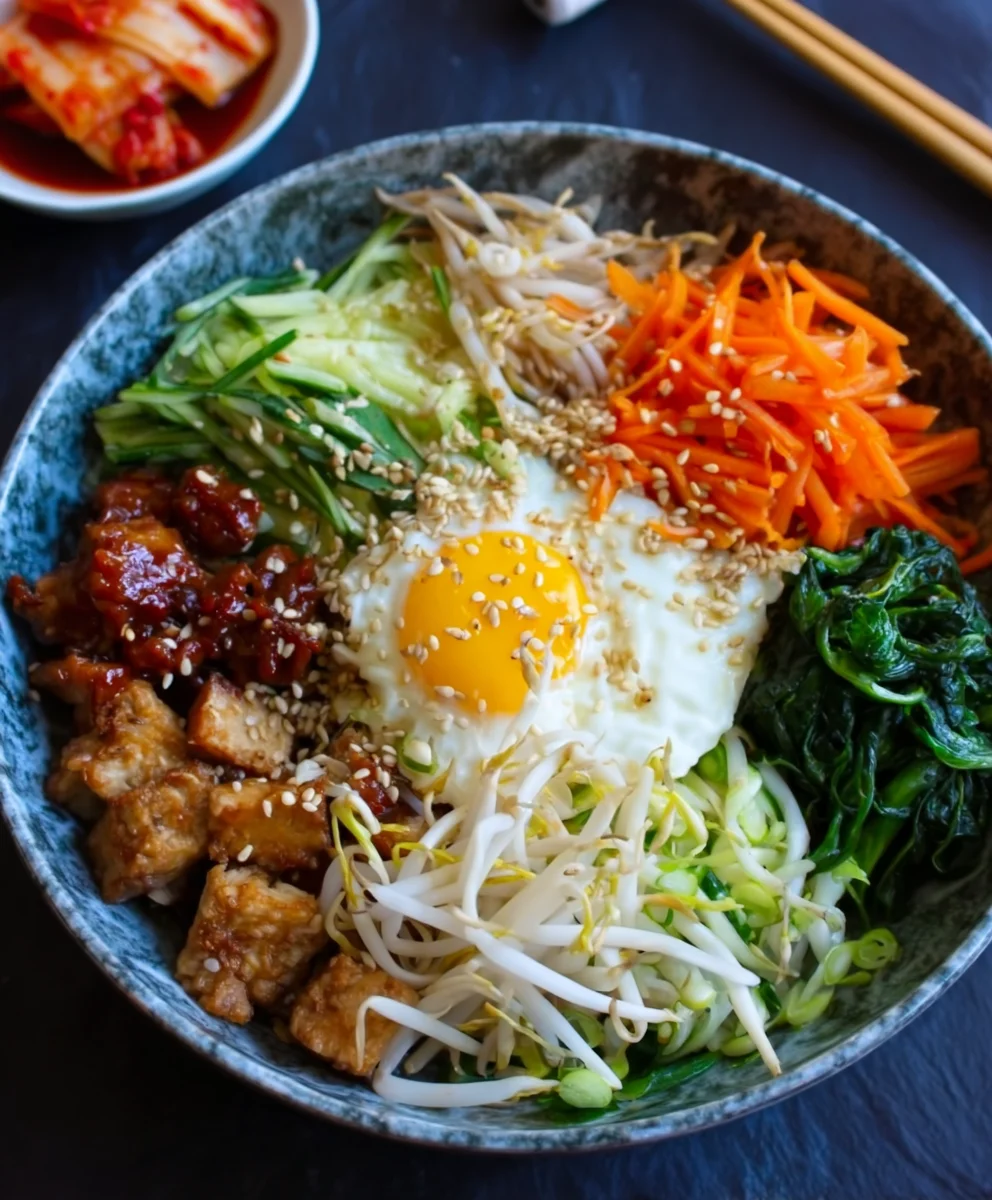
Vegan Bibimbap is more than just a meal; it’s a vibrant explosion of textures and flavors, a comforting embrace in a bowl that has captured hearts and taste buds worldwide. We’re not just talking about a simple stir-fry here; this Korean classic, when prepared the vegan way, elevates plant-based dining to an art form. The magic of Vegan Bibimbap lies in its harmonious assembly: a bed of perfectly steamed rice, crowned with a colorful medley of sautéed and seasoned vegetables, often topped with a luscious dollop of spicy gochujang sauce and perhaps a sprinkle of toasted sesame seeds. What makes it truly special is the sheer customization and the satisfying textural interplay. Each spoonful offers a unique combination of tender, crisp, and chewy elements, all brought together by that irresistible sweet and savory kick. It’s a dish that nourishes the body and delights the senses, proving that plant-powered eating can be both incredibly delicious and deeply satisfying.
Ingredients:
- 1 large cucumber
- 200 g fresh spinach
- 100 g bean sprouts
- 1 medium carrot
- 200 g firm tofu
- 100 g mushrooms (enoki mushrooms recommended)
- Salt, to taste
- Sesame oil, for cooking and finishing
- Minced garlic (for marinades)
- 2 tablespoons gochujang (Korean chili paste)
- 1 tablespoon rice vinegar
- 1 tablespoon agave syrup or maple syrup
- 1 tablespoon soy sauce
- 2 cloves garlic, minced
- 2 teaspoons sesame oil (for sauce)
Preparing the Vegetables
Cucumber Preparation
- Begin extract by washing your cucumber thoroughly. If you prefer not to eat the skin, you can peel it, but I find that leaving the skin on adds a nice texture and color.
- Trim off both ends of the cucumber.
- Cut the cucumber in half lengthwise. Then, using a spoon, gently scoop out the watery seeds from the center of each half. This step is optional but helps prevent the cucumber from becoming too soggy in the final dish.
- Slice the cucumber halves into thin, bite-sized matchsticks or half-moons. Aim for uniformity in size so they cook evenly.
- In a small bowl, toss the sliced cucumber with a pinch of salt and a tiny drizzle of sesame oil. This will lightly season the cucumber and help it retain a pleasant crispness. Set aside.
Spinach Preparation
- Wash the spinach very well under cold running water, making sure to remove any grit or dirt. You might need to do this in a few changes of water.
- Bring a small pot of water to a boil. Once boiling, add a pinch of salt.
- Carefully add the spinach to the boiling water. Blanch the spinach for just 30 to 60 seconds, until it wilts and turns a vibrant green. Overcooking will make it mushy.
- Immediately drain the spinach and plunge it into a bowl of ice water to stop the cooking process. This helps to preserve its bright color and nutrients.
- Once cooled, squeeze out as much excess water as possible from the spinach. You can do this by hand or by wrapping it in a clean kitchen towel.
- Chop the squeezed spinach into smaller, more manageable pieces.
- In a bowl, combine the chopped spinach with a small amount of minced garlic (about 1/2 teaspoon), a pinch of salt, and a tiny drizzle of sesame oil. Mix well and set aside.
Bean Sprout Preparation
- Rinse the bean sprouts under cold water and drain them well.
- Bring another small pot of water to a boil with a pinch of salt.
- Add the bean sprouts to the boiling water and cook for 2 to 3 minutes, or until they are tender-crisp. You want them to be cooked but still have a slight bite.
- Drain the bean sprouts thoroughly.
- In a small bowl, season the bean sprouts with a pinch of salt and a tiny drizzle of sesame oil. Toss to combine and set aside.
Carrot Preparation
- Peel the carrot.
- Trim off both ends.
- Cut the carrot into thin matchsticks, similar in size to your cucumber.
- Heat a teaspoon of sesame oil in a non-stick skillet over medium heat.
- Add the carrot matchsticks to the skillet and stir-fry for 3 to 5 minutes, until they are slightly tender but still have a slight crunch. You can add a tiny pinch of salt if desired.
- Remove the carrots from the skillet and set aside.
Mushroom Preparation
- If you’re using enoki mushrooms, trim off the root end where they are all attached. Gently separate the clusters into smaller bunches.
- If using other mushrooms, clean them and slice them according to their type. For example, shiitakes can be sliced, and oyster mushrooms can be torn.
- Heat a teaspoon of sesame oil in the same skillet used for the carrots over medium-high heat.
- Add the mushrooms to the skillet and sauté until they are tender and have released their moisture. If using enoki, they will cook very quickly, typically in 1 to 2 minutes.
- Season the mushrooms with a pinch of salt.
- Remove from the skillet and set aside.
Preparing the Tofu
Tofu Marinade and Cooking
- Press the firm tofu to remove as much excess water as possible. You can do this by wrapping it in paper towels and placing a heavy object on top for at least 15-20 minutes, or using a tofu press. This step is crucial for achieving a good texture.
- Once pressed, cut the tofu into small, bite-sized cubes or thin strips.
- In a small bowl, prepare a simple marinade for the tofu. Combine 1 tablespoon of soy sauce, 1 teaspoon of minced garlic, and 1 teaspoon of sesame oil.
- Add the tofu pieces to the marinade and gently toss to coat. Let it marinate for at least 10 minutes, allowing the flavors to penetrate.
- Heat 1 to 2 tablespoons of sesame oil in a non-stick skillet over medium-high heat.
- Carefully add the marinated tofu to the hot skillet, ensuring not to overcrowd the pan. You may need to cook it in batches.
- Cook the tofu for about 5-7 minutes per side, until it is golden brown and slightly crispy. Flip gently to ensure even cooking.
- Remove the cooked tofu from the skillet and set aside.
Making the Bibimbap Sauce
Gochujang Sauce Preparation
- In a small bowl, combine the 2 tablespoons of gochujang, 1 tablespoon of rice vinegar, 1 tablespoon of agave or maple syrup, 1 tablespoon of soy sauce, the 2 minced cloves of garlic, and the 2 teaspoons of sesame oil.
- Whisk all the ingredients together until well combined and smooth. Taste and adjust seasoning if needed – you might want a little more sweetness or a touch more vinegar depending on your preference. This sauce is the heart of your Vegan Bibimbap, providing the characteristic savory, spicy, and slightly sweet flavor.
Assembling Your Vegan Bibimbap
Building the Bowl
- This is where the magic happens! Take a large, shallow bowl.
- If you have cooked rice, place a generous portion of warm rice at the bottom of the bowl. This serves as the base for your bibimbap.
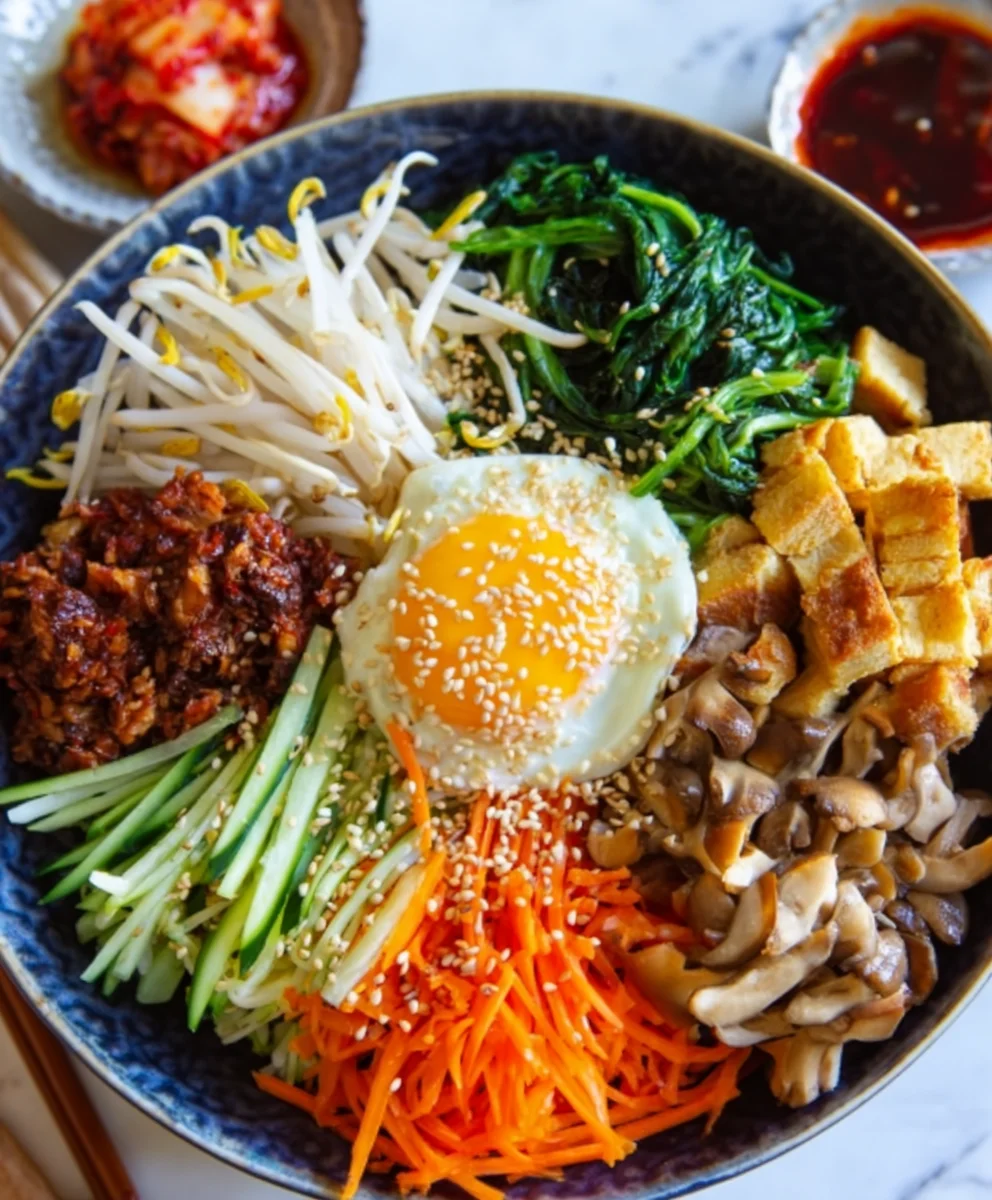
- Artfully arrange your prepared toppings around the edge of the bowl, on top of the rice. Create colorful sections with your spinach, bean sprouts, cucumber, carrots, mushrooms, and the golden tofu. Aim for an aesthetically pleasing presentation, as this is part of the bibimbap experience.
- Place a dollop of the prepared gochujang sauce in the center of the bowl, or serve it on the side for individuals to add as much as they like.
- Optional additions that complement vegan bibimbap beautifully include a sprinkle of toasted sesame seeds, a drizzle of extra sesame oil, or even a few slivers of toasted seaweed (nori).
- To enjoy, use your spoon and chopsticks to mix all the ingredients together with the rice and sauce, creating a harmonious blend of flavors and textures in every bite.
Conclusion:
And there you have it! A delightful and vibrant Vegan Bibimbap that’s as satisfying to make as it is to eat. We’ve explored how to create each delicious component, from perfectly cooked rice to an array of seasoned vegetables and that essential gochujang sauce. This recipe is a celebration of fresh ingredients and harmonious flavors, proving that plant-based eating can be incredibly exciting and diverse. Don’t be intimidated by the number of steps; each one builds upon the last to create a truly special dish.
For serving suggestions, a warm bowl is traditional, allowing you to mix everything together for the ultimate flavor explosion. Consider topping your Vegan Bibimbap with a sprinkle of toasted sesame seeds for extra crunch and aroma. Looking for variations? Feel free to swap out vegetables based on seasonality or your personal preference – think sweet potatoes, broccoli, or even sautéed mushrooms. You can also experiment with different plant-based proteins like marinated tofu or tempeh for added heartiness. The beauty of Vegan Bibimbap lies in its adaptability. So, go ahead and give this recipe a try. We encourage you to embrace the process and savor every bite!
Frequently Asked Questions:
What is the best type of rice for Vegan Bibimbap?
Medium-grain or short-grain white rice is generally preferred for its slightly sticky texture, which helps bind all the ingredients together. Brown rice is also a healthy and delicious option, though it will have a chewier texture and a nuttier flavor.
Can I make the components of Vegan Bibimbap ahead of time?
Absolutely! Many of the vegetable components can be prepped and stored in the refrigerator for a day or two. The rice can also be cooked in advance and gently reheated. The gochujang sauce will keep well for several days in an airtight container. This makes assembling your Vegan Bibimbap on a busy weeknight much quicker!
What if I don’t have gochujang? Can I substitute it?
While gochujang provides the signature spicy, sweet, and savory kick to Bibimbap, you can create a passable substitute. Mix sriracha or another chili paste with a touch of soy sauce, rice vinegar, and a hint of maple syrup or brown sugar to mimic its flavor profile. However, for the most authentic taste, we highly recommend seeking out gochujang!
Easy Vegan Bibimbap
A delicious and vibrant Korean rice bowl with a variety of seasoned vegetables, tofu, and a spicy-sweet sauce.
Ingredients
-
1 large cucumber
-
200 g fresh spinach
-
100 g bean sprouts
-
1 medium carrot
-
200 g firm tofu
-
100 g mushrooms (enoki mushrooms recommended)
-
Salt, to taste
-
Sesame oil, for cooking and finishing
-
Minced garlic (for marinades)
-
2 tablespoons gochujang (Korean chili paste)
-
1 tablespoon rice vinegar
-
1 tablespoon agave syrup or maple syrup
-
1 tablespoon soy sauce
-
2 cloves garlic, minced
-
2 teaspoons sesame oil (for sauce)
Instructions
-
Step 1
Prepare the vegetables: Wash and chop cucumber into matchsticks, blanch spinach and season with garlic, salt and sesame oil, cook bean sprouts until tender-crisp and season, stir-fry carrot matchsticks until tender-crisp, and sauté mushrooms until tender. Set all aside. -
Step 2
Prepare the tofu: Press firm tofu to remove excess water, cut into bite-sized pieces, marinate with soy sauce, minced garlic, and sesame oil. Pan-fry until golden brown and crispy. -
Step 3
Make the bibimbap sauce: Combine gochujang, rice vinegar, agave syrup (or maple syrup), soy sauce, minced garlic, and sesame oil in a bowl. Whisk until smooth. -
Step 4
Assemble the bowl: Place a generous portion of warm rice at the bottom of a large, shallow bowl. -
Step 5
Artfully arrange the prepared vegetables and tofu around the edge of the bowl, on top of the rice. Place a dollop of the gochujang sauce in the center. -
Step 6
Optional: Sprinkle with toasted sesame seeds, drizzle with extra sesame oil, or add slivers of toasted seaweed. Mix all ingredients together with rice and sauce before eating.
Important Information
Nutrition Facts (Per Serving)
It is important to consider this information as approximate and not to use it as definitive health advice.
Allergy Information
Please check ingredients for potential allergens and consult a health professional if in doubt.